Have you ever stopped to consider how often you rely on your elbows throughout the day? From brushing your teeth to lifting your morning coffee, your elbows help you perform countless daily activities. When elbow pain or injury strikes, even the simplest tasks can become ordeals.
Maintaining healthy elbows is essential for a balanced and active lifestyle. Whether you’re an athlete sidelined by tennis elbow, an office worker struggling with cubital tunnel syndrome or someone dealing with the gradual onset of arthritis, the Orthopaedic Institute of Ohio here to help you regain your quality of life.

Elbow
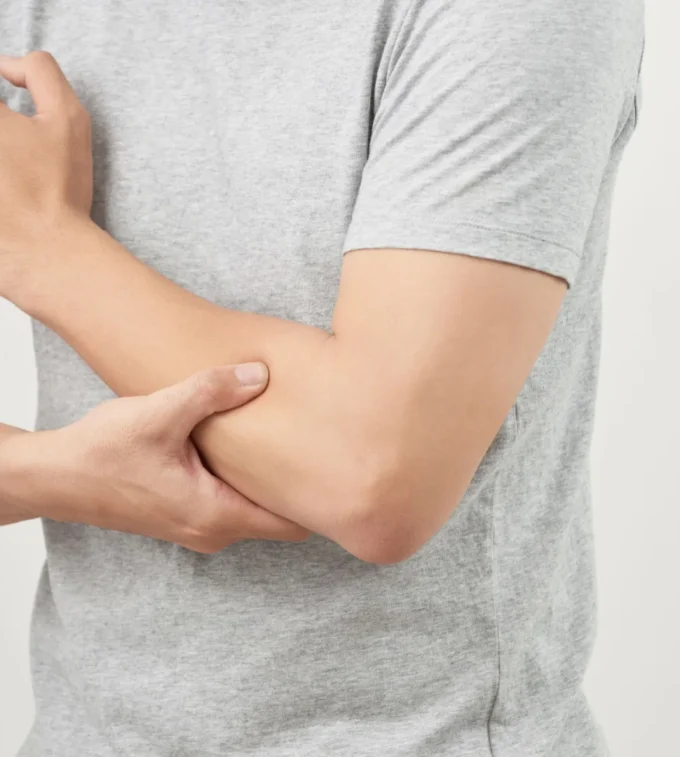
The Anatomy and Function of Our Elbows
Each elbow is a complex structure made up of bones, tendons and ligaments working together to give you flexibility and strength.
- Bones: The elbow joint is where three bones meet – the humerus (upper arm bone), radius and ulna (forearm bones).
- Joints: The main elbow joint allows for bending and straightening, while the smaller joint in the area provides rotational movement.
- Tendons and Ligaments: These are crucial for connecting bones to muscles and providing stability. Your biceps tendon, for example, attaches your biceps muscle to your radius bone, enabling arm movement.
When these components work together properly, they enable a wide range of movements and functions:
- Support and Stability: Elbows provide support for your arm movements, especially during tasks that require precision, like writing or typing.
- Leverage: The unique structure of the elbow joint allows for effective leverage, which is essential in lifting and carrying objects.
- Shock Absorption: When you engage in activities like catching or throwing, your elbows help absorb and distribute the shock, protecting the joint from injury.
- Coordination With Hands and Shoulders: Your elbows work in conjunction with your wrists and shoulders so you can perform coordinated movements for complex tasks.
- Flexibility: Your elbow’s ability to flex and extend is vital for tasks like reaching overhead, pushing and pulling.
Rotation: Elbows allow you to rotate your forearm, enabling you to turn your palms up or down.
Elbow injuries and conditions can arise from activities, lifestyle factors or the natural aging process. Active people, particularly athletes, often develop elbow issues due to repetitive motions like throwing or lifting, leading to strains or conditions such as tennis elbow or golfer’s elbow.
Work-related activities that involve consistent arm movements can also strain the elbow. Accidents, such as falls, can result in more acute injuries like sprains, dislocations or fractures. As we age, the wear and tear on our elbow joints can lead to arthritis, as well as the pain and decreased mobility that accompany it.
“Quick and personable experience all around (reception, xray tech, nurse, physicians assistants and the casting tech). They were all great with my 4 year old who fractured his elbow.” – Heather S.
Common Elbow Injuries and Conditions
Recognizing the types of injuries and conditions that affect the elbow is the first step in finding an appropriate treatment. There are numerous elbow issues we diagnose and treat at the Orthopaedic Institute of Ohio, including but not limited to the following:
Biceps Tendon Rupture
The tendons that attach the biceps muscle to the upper arm bone can sometimes tear or rupture. Although the arm may remain operational, the function may be reduced or restricted. A biceps tendon rupture can be partial or complete, with the complete rupture causing more significant functional impairment.
Biceps tendon ruptures typically occur when there is sudden, forceful stress on the tendon, often during heavy lifting or sports. This injury is characterized by a sharp pain in the arm, sometimes accompanied by an audible pop. There might be visible bruising and a bulging appearance (referred to as “Popeye muscle”) where the muscle retracts.
Since these ruptures don’t heal on their own, surgery is usually recommended, especially for active individuals or those who require full arm strength for work or sports. The surgical procedure involves reattaching the torn tendon to the bone, followed by a period of immobilization. After surgery, a structured physical therapy program focusing on gradual strength and flexibility exercises is essential for a complete recovery.
Cubital Tunnel Syndrome
Cubital Tunnel Syndrome typically arises from prolonged pressure on the ulnar nerve, also known as the “funny bone,” which runs along the inside of the elbow. This can happen due to repetitive elbow bending, leaning on the elbow for long periods or even from fluid buildup around the elbow joint. The syndrome is characterized by numbness and tingling in the hand, especially in the ring and little fingers, and decreased hand grip strength and coordination. In chronic cases, muscle atrophy in the hand can occur.
Conservative treatments include using elbow braces, avoiding pressure on the elbow and exercises to strengthen the surrounding muscles. If these measures fail to alleviate symptoms, surgery may be required. Surgery typically involves releasing the nerve, sometimes moving it to a position where it’s less likely to be compressed. Post-surgery, elbow physical therapy is important to regain full function and prevent recurrence of the condition.
Elbow Arthritis
Elbow arthritis occurs as the protective cartilage in the elbow joint gradually deteriorates over time. This wear and tear can be accelerated by joint injuries, such as fractures or dislocations, leading to the early onset of arthritis. The condition is marked by symptoms like aching pain, stiffness and swelling in the elbow. These symptoms typically worsen with activity, especially movements that strain the joint.
Treatment for elbow arthritis includes a range of nonsurgical options like physical therapy and pain management through medications or corticosteroid injections. For cases where nonsurgical treatments are insufficient, surgical options such as joint debridement, arthroscopy, or, in severe cases, elbow joint replacement may be considered. Lifestyle modifications, like activity adjustments and weight management, also play a critical role in managing symptoms and slowing the progression of the condition.
Tennis Elbow
Tennis elbow, or lateral epicondylitis, usually develops from repetitive motions that strain the tendons and muscles of the forearm, leading to inflammation and pain around the elbow. Common activities causing this include racket sports and jobs that involve repetitive gripping or lifting. Symptoms often include aching pain on the outside of the elbow, which can radiate into the forearm and worsen with gripping or lifting movements.
Initial treatment typically focuses on rest and avoiding activities that exacerbate the condition. Ice, anti-inflammatory medications and physical therapy exercises to strengthen and stretch the forearm muscles are commonly used. Brace or strap support may also be recommended to reduce strain on the affected area. If these conservative treatments fail to provide relief, more advanced therapies like corticosteroid injections might be considered. Surgery is generally reserved for cases where all other treatments have not provided adequate relief and the condition significantly impacts daily activities.
Golfer’s Elbow
Golfer’s elbow, or medial epicondylitis, is primarily caused by repetitive wrist and arm motions that strain the tendons on the inside of the forearm. This condition can affect anyone who engages in activities involving gripping or wrist flexion, like throwing sports or certain manual jobs. Common symptoms include pain and tenderness on the inside of the elbow, sometimes extending along the inner forearm, and a weakened grip.
The first line of treatment typically involves rest to allow the tendons to heal, coupled with ice therapy to reduce pain and swelling. Physical therapy plays a crucial role, focusing on exercises that stretch and strengthen the forearm muscles. Braces or straps may also be used to reduce tendon strain during activities. Surgery is rarely needed for this condition.
Elbow Dislocation
An elbow dislocation typically happens due to a fall or a direct blow, often when the hand is extended during the impact. This forceful event pushes the bones of the elbow out of their normal alignment. Symptoms of an elbow dislocation include severe pain, obvious deformity and inability to bend the elbow. Swelling and bruising around the elbow are also common.
In most cases, our surgeons can put the bones back into alignment manually with a process known as reduction. After the reduction, your elbow may be immobilized temporarily with a splint or sling. Following immobilization, physical therapy is crucial to restore a normal range of motion and strength to the joint. Surgical intervention might be necessary to repair these structures if there are additional injuries like fractures or significant ligament damage.
Elbow Sprains and Fractures
Elbow sprains occur when the ligaments, which connect bone to bone within the joint, are stretched or torn, often due to a sudden twist or impact. Symptoms typically include pain, swelling and limited movement. In contrast, elbow fractures involve a crack or break in one or more of the bones forming the elbow, usually resulting from a direct blow or fall. These are characterized by intense pain, swelling, bruising and an inability to move the elbow normally.
For treating sprains, the focus is on reducing swelling and pain, often through rest, ice, compression and elevation (RICE method), followed by physical therapy to regain strength and flexibility. Fractures may require immobilization in a cast or splint to promote proper healing of the bone. In more severe cases, particularly when the bone fragments are displaced, surgical intervention may be necessary to realign and stabilize the bones.

When To Seek Treatment for an Elbow Issue
Your elbows are put under stress daily, and although they’re designed to withstand significant strain, they are not immune to injury or wear and tear. You should know the signs that indicate it’s time to seek help:
- Persistent pain that doesn’t improve with rest or over-the-counter pain relievers
- Pain that worsens with specific movements or activities
- Swelling or visible deformity around the joint
- Bruising or discoloration around the elbow area
- Warmth or redness around the joint, which may indicate inflammation
- Stiffness or reduced range of motion
- Weakness in your arm, wrist or hand
- Numbness or tingling sensations, especially in your ring and pinky fingers
- A popping or clicking sound when moving your elbow
- Difficulty performing everyday tasks like lifting objects or turning door knobs
Do not ignore these warning signs or attempt to “push through” the discomfort. Early treatment often leads to better outcomes and faster recovery times. If you’re unsure whether your elbow issue requires medical attention, it’s always better to err on the side of caution. Schedule a consultation with the elbow experts at OIO today.
“Very friendly and knowledgeable. They registered and got me into a doctor quickly. Treatment went very well. I received a cortisone shot in my bicep tendon and it truly didn’t hurt at all. I would recommend to anyone.” – Shannon W.
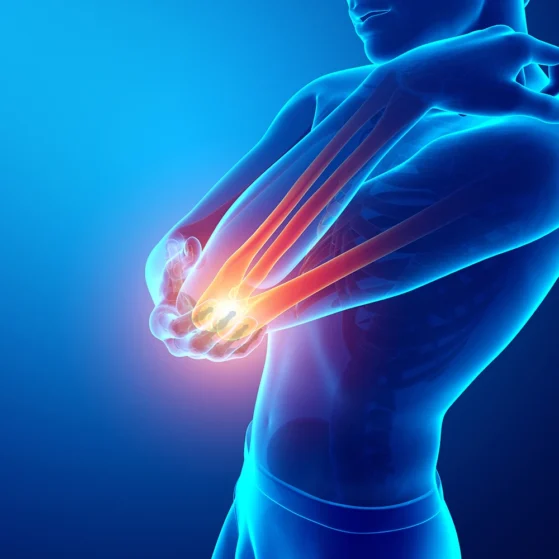
How We Diagnose Elbow Conditions
Our approach to diagnosing elbow conditions is thorough. Our providers use a combination of clinical expertise and advanced technology to pinpoint the exact cause of your discomfort.
We’ll start by discussing your symptoms, their onset and any activities that may have contributed to your condition. We’ll also discuss your medical history and any previous treatments you’ve undergone.
To assess the physical impact of your condition, we’ll examine the range of motion, strength and stability of your elbow, as well as any areas of tenderness, swelling or visible deformity. We may perform specialized tests to evaluate particular conditions if your symptoms warrant it.
If your provider requires an inside look at your elbow joint, they will order an imaging test such as an x-ray or MRI. We also offer diagnostic tests to assess muscle and nerve function.
Once we have gathered all the information available, we can offer a diagnosis and develop the right treatment plan for your needs.
Nonsurgical Treatment Options for Elbow Injuries and Conditions
Depending on the nature of your condition or injury, we may recommend one or more of the following nonsurgical elbow treatments:
Medications and Injections
Anti-inflammatory drugs and steroid injections may be used over the short term to relieve pain, reduce swelling and restore mobility. These are frequently prescribed in conjunction with a period of resting the joint in the early stages of treatment or for flare-ups of chronic conditions.
Immobilization
Immobilization using a splint or cast may be recommended to allow for proper healing of injured bones and ligaments. This treatment helps maintain the correct alignment and prevents further injury to the affected area during the healing process. Immobilization is a common approach to elbow fractures but can also be used effectively for other types of injuries.
Physical Therapy
Exercises under the guidance of a licensed physical therapist can restore strength to the elbow joint as well as range of motion. Physical therapy may be prescribed as a stand-alone treatment, such as for managing chronic conditions, or after immobilization or surgery to help you regain the full function of your elbow.
Surgical Treatment Options for Elbow Injuries and Conditions
While our team always explores conservative treatments first, there are cases when surgery is the most effective way to restore your elbow’s function and alleviate your pain. Our board-certified orthopaedic surgeons are skilled in many advanced surgical techniques, from minimally invasive arthroscopic procedures to complex reconstructive surgeries.
Elbow Arthroscopy
Elbow arthroscopy is a minimally invasive surgical method that allows our surgeon to see inside the elbow joint. Through small incisions and the use of a tiny camera, the surgeon can make an accurate diagnosis and recommend the proper course of treatment. In some cases, damage can also be corrected during the procedure.
Surgery
Surgery is generally regarded as a last line of treatment when other therapies do not produce the desired effect. Depending on your needs, various operations can be done to repair the elbow joint or replace it entirely.
OIO: Find Lasting Relief With Expert Elbow Care
Living with elbow pain is frustrating and limiting. You may have had to give up activities you love, and you may even be struggling to perform daily tasks. It doesn’t have to be this way. With care from the experienced team at the Orthopaedic Institute of Ohio, you can find relief and regain your independence.
Our team of orthopaedic providers brings years of specialized experience in elbow care to every case we handle. We take the time to listen to your concerns and develop a personalized treatment plan that fits your schedule, budget and lifestyle. We collaborate across specialties — including physical therapy, pain management and surgery — to provide holistic care that addresses all aspects of your elbow health.
Our commitment to you doesn’t end when your treatment does. We provide ongoing support to ensure your recovery goes smoothly and you achieve the lasting comfort you deserve. Whether your goal is to return to your favorite sport, play with your active grandchildren or simply to carry groceries without pain, we are here for you.
“We went to the walk-in clinic to have my son’s elbow x-rayed and assessed. Waited less than 10 minutes to get called back. Everything went to smooth and quickly. Great facility and great providers!” – Torrie S.
Innovative Elbow Care for Active Lives — Get Started Today
At the Orthopaedic Institute of Ohio, we understand the impact an elbow injury or disorder can have on your entire life, and our goal is to find the best way to help you heal and feel better. We offer comprehensive diagnostics and a range of treatment options to reduce pain, restore mobility and help you get back to your daily activities as quickly as possible.
To learn more, contact the Orthopaedic Institute of Ohio today at 419-969-3294 or request your appointment online.
FAQs
What is the recovery time for elbow surgery?
Elbow surgery recovery time varies depending on the procedure and unique patient factors. For minimally invasive procedures like elbow arthroscopy, patients may regain full function within two to six weeks. More complex surgeries typically require six to 12 weeks for initial recovery. Total elbow replacement, the most extensive procedure, usually requires a three to six month recovery period.
Patients with sedentary jobs may return to work within one to two weeks after a minimally invasive procedure. Those with more physically demanding occupations might need four to six weeks off work. After a complex surgery, office workers might resume modified duties after three to four weeks, while individuals in labor roles may require two months or more before returning to full duty.
Can elbow pain be related to neck or shoulder problems?
The upper body’s nerve pathways are connected, which means that, in some cases, neck or shoulder problems can be the reason for elbow pain. This phenomenon is known as referred pain, where discomfort is felt in a different area than its actual source.
For instance, a pinched nerve in the neck (cervical radiculopathy) may cause pain that radiates down the arm to the elbow. Similarly, shoulder conditions like rotator cuff injuries or frozen shoulder can sometimes manifest as elbow pain. This is why it is so important for a skilled orthopaedic specialist to determine the true source of your discomfort and plan appropriate treatment.
What's the success rate for elbow replacement surgery?
Elbow replacement surgery has demonstrated high success rates, with approximately 90% of patients experiencing significant pain relief and improved function post-surgery. Most elbow replacements have a lifespan of 10 to 15 years. Some last 20 years or more.
Can repetitive computer use cause elbow problems?
Many of our patients are surprised to learn that their computer habits might be behind their discomfort. Frequent computer users often develop elbow conditions as a result of repetitive motions, poor posture and overuse of the muscles and tendons in the forearm and elbow.
To reduce your risk, focus on proper ergonomics at your workstation, take regular breaks to rest and stretch, and mix up your activities when possible. These simple changes can make a big difference in your elbow health.
What activities should I avoid if I have elbow pain?
Complete rest isn’t necessary for every elbow condition. But, it is important to give your joint a chance to heal, and modifying your activities can help. Here are some activities you might want to avoid or adapt:
- Lifting heavy objects, especially with your palm facing down
- Activities that involve repeated elbow bending or wrist turning
- Tasks that involve gripping and twisting simultaneously
- Sports that require repetitive arm movements (e.g., tennis, badminton)
- Typing or mouse use for extended periods without breaks
Your doctor or physical therapist can provide more specific guidance based on your condition and lifestyle.